How to secure AML compliance budgets in 2026 for maximum RegTech impact

To stay ahead in 2026, organisations need to strategically allocate resources to strengthen systems and drive operational efficiencies. AML compliance budgets play a key role here, especially when advanced compliance solutions are supported by CFOs and aligned with key stakeholders.
While discussions about compliance often focus on the complexity of ever-changing regulations and their impact on CFO budgets, the “cost of compliance” doesn’t have to be a drain. Regulatory technology (RegTech) can become a profit enabler, delivering measurable competitive advantages even as customer expectations, digital threats, and regulatory demands intensify.
Effectively demonstrating these benefits can shift perception, transforming RegTech funding from a necessary expenditure into an investment that delivers more than the initial 2026 budgets allocated for the year.
Navigating the CFO’s compliance challenges
The compliance function has changed face over the past few years. Once a mandatory legal arm is now a highly technical investigative safeguard to ensure security and integrity. Duly, budgets have soared to accommodate legislative changes. In the UK, the annual compliance bill is around £38 billion – painting the concern as an unwieldy money drain by budget allocators. With regulatory scrutiny increasing and tighter budgets, CFOs often find themselves in a difficult balancing act.
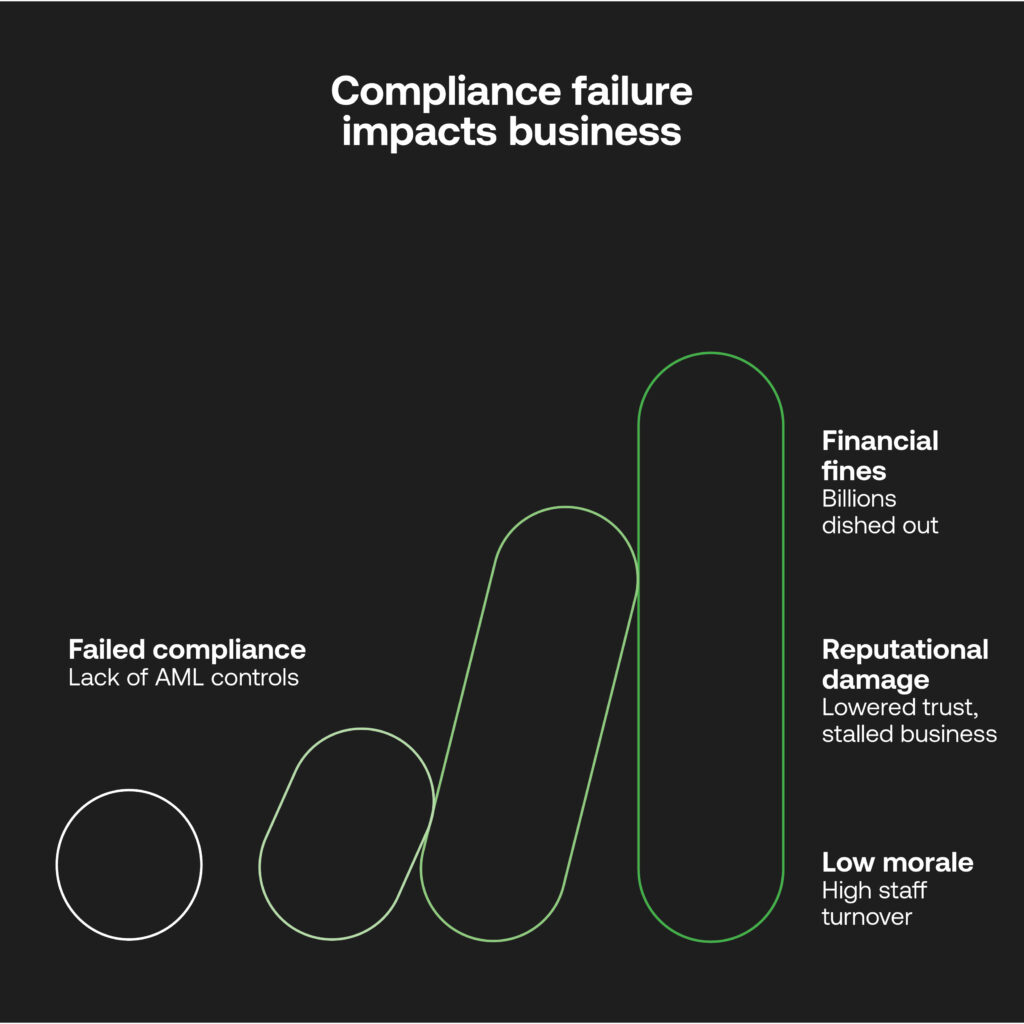
What’s often left out of the equation however is how next-generation compliance’s adaptability can generate ROI rather than diminish it, especially through mitigating financial crime risks that are far more damaging to the bottom line. If a business is found guilty of failed anti-money laundering (AML) controls, for a lack of systemic changes or tech adoption, billions may be dished out in fines.
Plus, that reputational damage is challenging to shift in the public eye, lowering trust, stalling new business, and causing weakened staff morale and high turnover. Compliance is a significant contributor to loss prevention in many ways; albeit difficult for a CFO to account for without evidence of a platform’s empirical efficiency gains, or (in more severe cases) after experiencing mounting restorative costs from non-compliance.
Building the case for RegTech adoption
UK advisory firm Grant Thornton has found three primary concerns when investing in newer compliance technology: the overall costs; how user-friendly it is; and operational effectiveness. The same study also discovered how a whopping 86% felt the level of communication between compliance departments and stakeholders could be improved.
Therefore, a first step toward RegTech buy-in means creating an open dialogue with compliance heads taking a seat at the budgeting table. As the hands-on users of an AML platform (in conjunction with a RegTech’s support team), they’re not only able to communicate how systems can become operational cost-savers beyond their necessary role in fincrime prevention, but also demonstrate this through auditable logs aligned with a CFO’s key performance metrics in the following areas:
- When AI-driven monitoring surfaces only suspicious alerts, evidence of fewer false positives proves less monetary burden from inefficient investigations, with time saved for compliance workflows that matter.
- Automated systems operate continuously, detecting potentially high-risk behaviours and transactions in line with up-to-date watchlists. This removes the need for reactive or ‘after-the-fact’ investigations that could trigger non-compliance penalties, while establishing a forward-looking, risk-based framework that delivers ROI from day one.
- An initial investment into an elastic architecture enables firms to reduce or scale up a modular AML platform to fit changing regulatory needs and budgets, away from fixed offerings and inflexible rules-based systems whose ‘complete overhauls’ delay deployments and the chance to gain a competitive advantage through technology.
“Technology can be an answer to many budget allocators’ concerns, albeit knowledge around its real-world improvements for the bottom line need to be stressed,” says James Saunders, CTO at RelyComply. “This starts with sector-wide expertise sharing, and more practically involves partnerships to develop bespoke AML solutions that contribute to business’ inflows as much as prevent crime.”
Three compelling reasons for CFO buy-in
Traditional legacy systems and compliance workflows are far from what’s needed to achieve strict compliance protocols today, where adaptable Regulatory Technology enables firms to take a considered future-proofed stance toward onboarding, monitoring and reporting.Initial investment in a service provider should establish a successful long-term partnership, and not a quick fix unable to last the test of time – as follows:
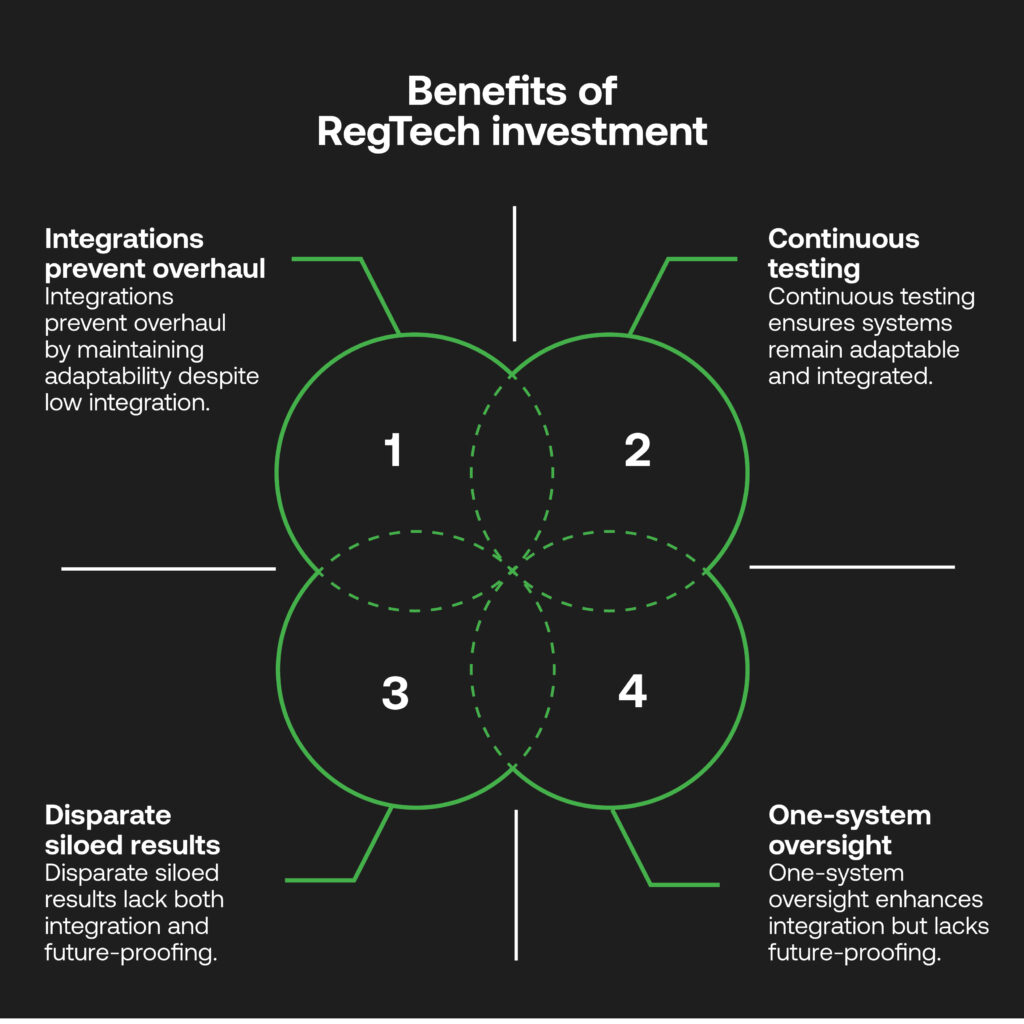
1. Integrations strengthen existing systems.
Modern cloud-native compliance platforms are designed to work alongside your current technology stack. Using API connections, they can unify historical data and operational processes into a single, connected ecosystem. This approach helps create an end-to-end compliance framework that scales smoothly as customer bases expand.
2. Centralised oversight minimises operational friction.
When compliance processes sit across multiple disconnected systems, teams often face duplicated work and fragmented visibility. Bringing AML activities together within one secure platform streamlines monitoring and reporting, reduces inefficiencies, and increases the interplay between relevant compliance authorities.
3. Ongoing testing keeps compliance infrastructure adaptive.
Leading RegTech providers support continuous improvement through testing environments and live-data sandboxes. These allow organisations to trial new configurations and refine processes safely, ensuring systems remain effective and adaptable without risking customer data or creating long-term technical debt.
“Collaboration is at the heart of what RegTech providers do,” continues Saunders. “Policies, platform, and process all need to be worked out together in a way that’s cost-effective and relevant per company, to ensure initial ROI goals are trackable towards measures of operational success.”
Crafting an effective action plan
Of course every business has specific AML needs according to their size and resources. This is why a little internal research can accelerate the conversation around compliance budgets toward actionable change across the next few months:
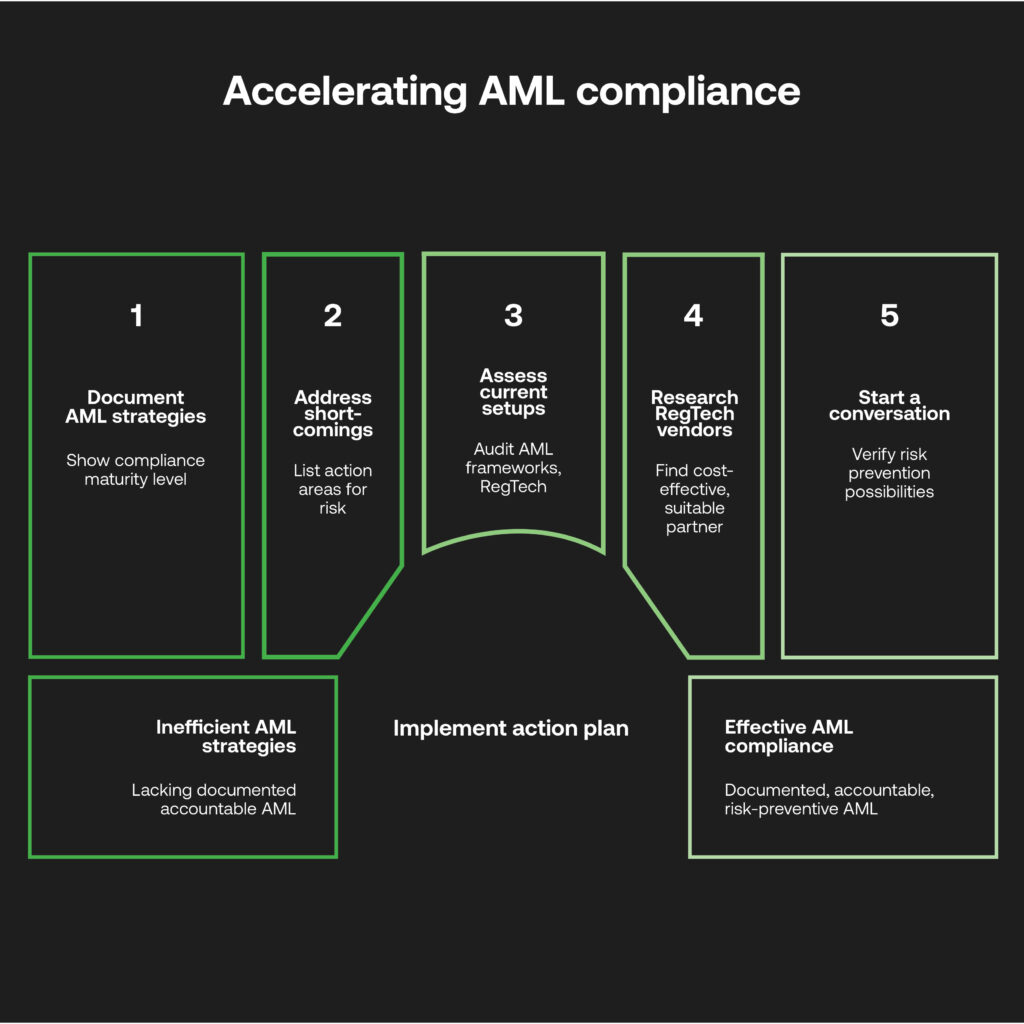
- Document current strategies. This shows the levels of your business’ maturity in maintaining compliance culture, proving accountability that trickles down to the experiences of end customers.
- Identify gaps. According to the recommendations of local and global regulators, make a list of action areas that may be liable to AML risk.
- Evaluate existing systems. Conduct internal and external audits on AML frameworks and RegTech to determine where systems and data can be consolidated, and overheads can be lowered.
- Investigate RegTech vendors. Solution capabilities and build complexity can vary, where a cost-effective partnership with a suitable partner should be able to determine operational blind spots and offer guidelines for adopting a bespoke development roadmap.
- Engage stakeholders early. RegTechs can verify where better risk prevention is possible in line with your current set up, and according to your CFO’s budgets for compliance.
Invest now for a future-ready compliance function
Compliance budgeting is an ongoing demand involving multiple internal and external factors. However, falling behind in AML capabilities can do lasting damage to business assets and public perception, especially when instilling next-generation compliance functions can prove to be so fruitful as a returns-generator in a complex regulatory landscape.
Smarter RegTech investment now can not only avoid higher costs and repercussions down the line, but kickstart a sophisticated, adaptable and practical framework – so long as compliance teams and their budget holders instill an aligned approach to anti-fincrime culture and become acquainted with RegTech’s positive competitive advantages that can prove a world of difference for compliance teams across the financial ecosystem.