Blind bets and AML: Hidden risks in South Africa’s informal gambling world
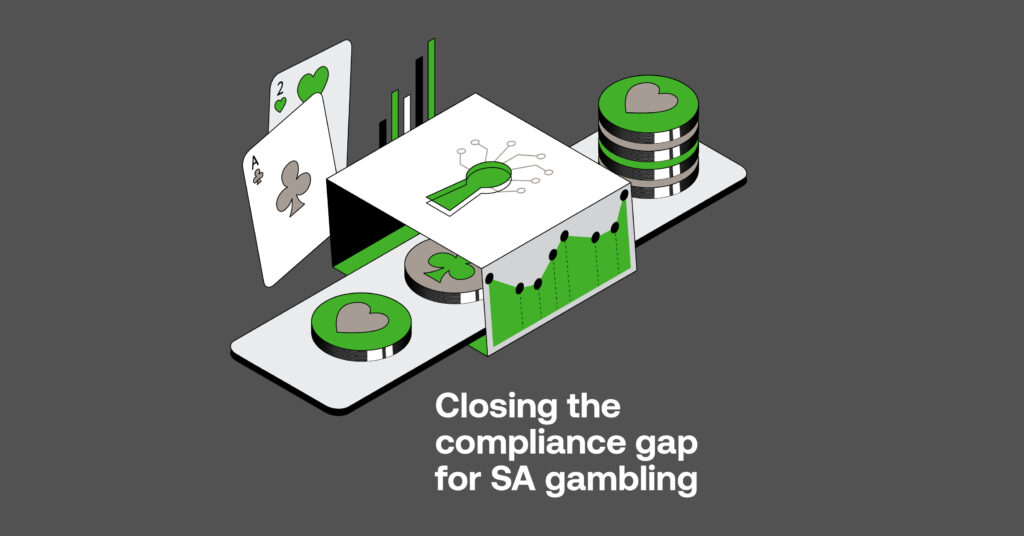
While responsible gambling is spouted in advertisements through sport and social media, little is being done to address South Africa’s informal gambling world. Amongst the country’s growing gambling interest – be it through online gaming, casino tables, or horse racing – almost 30% of the public is reckoned to have accessed illegal gaming sites, from which the economy is potentially being cheated out of R10 million per year.
The scale of these underground markets is still unknown, albeit the rise in South Africans’ gambling habits is clear. There’s therefore greater ground for illegal proceeds to be masked and flushed through the sector. And if we multiply the fact that gambling can now be easily accessible online as well as offline, on handheld devices and laptops rather than at the bookmakers, that digitalisation paints a scarier picture for how easily criminals can play with their earnings in unregulated corners.
There’s already been a blind eye turned to gambling-related risks the past couple of decades. Now emerging laundering typologies threaten to leave the gambling sector exposed to risk, it’s no longer a peripheral AML consideration. Teams at gambling companies and the banks and payment providers they work with have to be proactive to the sure signs of wrongdoing, and clamp down on crime that threatens to always ‘beat the house’ charged with protecting consumers.
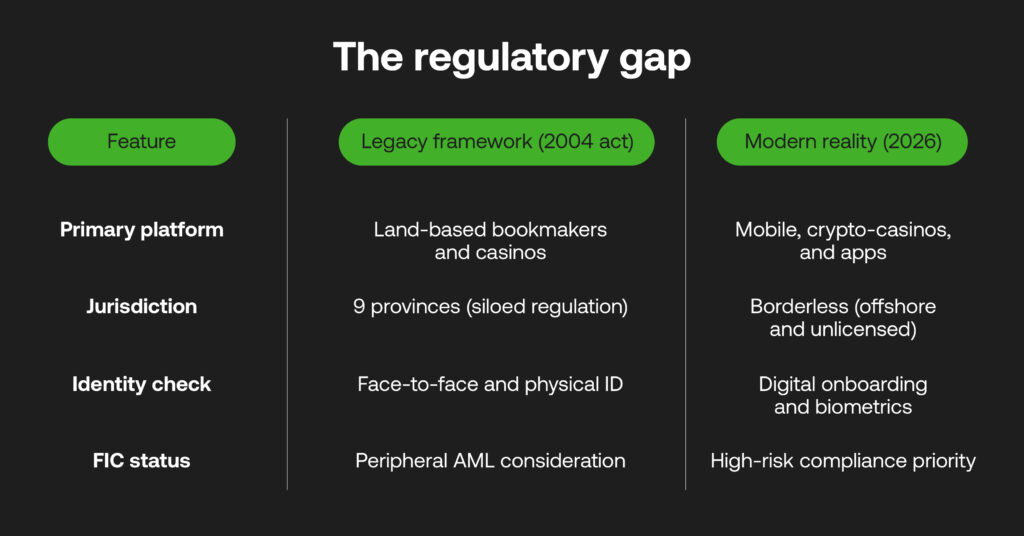
The regulatory context of South African gambling
The Financial Intelligence Centre Act (FICA) understands the gambling sector’s positive influence on the nation’s economy, facilitating job creation and fund flows, and so places obligations on gambling institutions as accountable institutions. Ultimately, financial institutions and the casinos and gambling companies they partner with are responsible for the detection and reporting of any suspicious activity, regardless of the source of funds.
In an ever-running tradition, the country’s definitions of gambling laws have not been strong enough. All are based on the National Gambling Act in 2004 – where a planned updated in 2008 still sits unresolved in government – all before the proliferation of digital gambling tools that are commonplace today. Nine provinces follow their own gambling statutes in isolation, with banks and media partners misunderstanding such local nuances, and the National Gambling Board cannot sufficiently regulate offshore operators with fragmented tools for detection and enforcement.
In 2023, the FIC’s consultations with the State Security Agency and the UK’s HM Treasury Technical Assistance Unit determined casinos as low risk for terrorist financing. While discussions have been held with SABRIC to restrict payment access on illegal gambling sites, regulators must increase their 24/7 monitoring of suspicious behaviour to maintain risk-focused compliance amid growing threats. Even the National Gambling Policy Council (a partnership between industry and government) has only been reported to have convened twice in the last eight years.
Consumer trends to compliance threats
Already, there are over 2,000 illegal gambling operators with a tractor beam poised on South Africa. These get promoted by affiliate clickbait sites to drive greater betting numbers from gamblers, often located in jurisdictions with weak AML and tax controls including Curaçao, Malta or the Philippines. This complicates auditability for cross-border payments when they reach jurisdictions with regulations that differ to South Africa, and do not provide suitable protection for its consumers.
The problem gets exacerbated considering the nation’s unrelenting growth in gambling activity, producing high volumes of difficult-to-trace transactional data. The Daily Maverick notes that gambling turnover reached R1.5 trillion in the 2024/5 year, and 56% of bettors admitted to gambling through financial need. Despite the government’s proposed 20% tax on online gambling, in an attempt to raise inflows and reduce harm, unchecked gambling adoption can likely turn to unlicensed platforms offshore.
The emergence of illegal gambling risks
Typical methods for launderers still abound within the gambling sector, and are able to proliferate when criminals profit from regulatory grey areas, regional licensing differences, poor AML controls for transaction monitoring, and the interoperational landscape of online casinos, applications, and site operators – flagged as sector-specific threats by the FIC.
When criminals can easily set up varying gambling accounts, their launderers can smurf smaller deposits frequently through them to obscure detection from risk thresholds – and this includes offline and online betting platforms that may be unregulated. Rapid fund movement is defined by payments and withdrawals being wired or taken out between legitimate business accounts and casinos.
High-risk and sanctioned individuals such as politically exposed persons (PEPs) have to be checked in line with account details and patterns of transactional data. Yet such advanced identity verification (IDV) is difficult to conduct in siloed AML systems. Some patrons may be unwilling to provide identification in the first place. Criminal networks may also use stolen identities to conduct transactions through entities other than an account holder.
Anonymity software is becoming worryingly sophisticated in order to obscure biometric documentation and KYC checks for online gambling platforms too, while virtual currencies can escape monitoring checks through crypto mixers. If even the earliest IDV measures cannot be implemented for online gambling, criminals can upscale their laundering operations throughout online gambling channels to the point of no return – and the institutions charged with discovering such alerts will be penalised by enforcement agencies.
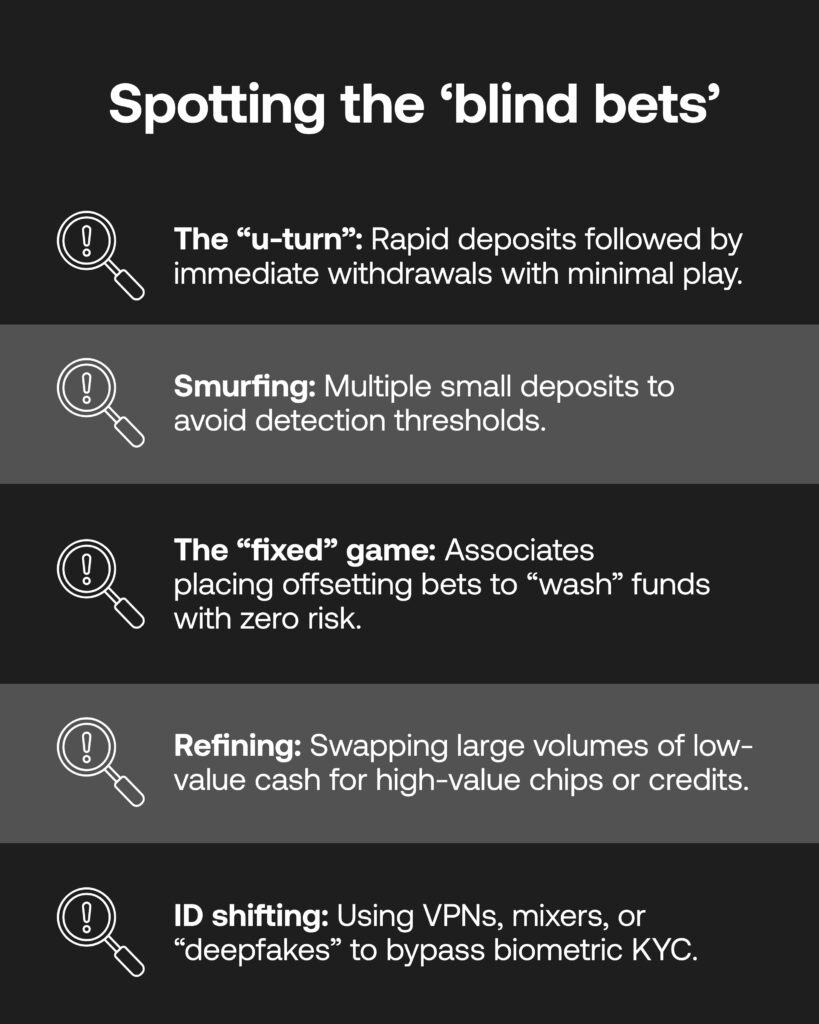
A practical AML checklist for gambling-linked funds
When such laundering techniques are employed across varying digital gambling channels and regions, South Africa’s financial ecosystem must employ enhanced due diligence and monitoring technologies to ensure sound IDV, and alert to growing signals of unusual betting or transactional patterns.
This covers not just gambling companies accountable for raising and submitting Suspicious Activity Reports (SARs) to the FIC, but their cooperative third parties (payment providers, clearance houses, banks), government bodies, and law enforcement to collaboratively prosecute wrongdoing through end-to-end AML platforms that facilitate:
- The mapping of risk typologies to illegal gambling proceeds.
- Advanced KYC/V that can spot gaps in pivotal onboarding information to open accounts, and biometric authentications for IDV.
- Real-time transaction monitoring tuned to unusual gambling payment patterns using user-set risk thresholds.
- Risk scoring controls to raise any screened high-risk individuals for enhanced due diligence.
- Automated audit trails that can track, detect and report anomalous data to the FIC through accurate, detailed SARs.
- Documented protocols and ongoing staff training and audits to be proactive to gambling financial crime typologies, compliance measures and recommended actions.
If South Africa’s accountable institutions are more open to partnerships with regulatory technology (RegTech) providers, existing compliance gaps that gambling-based launderers exploit can be closed, while also staying flexible to typologies they’ll continue to explore and implement; namely crypto-based transactions, deepfaked identities, and decentralised finance.
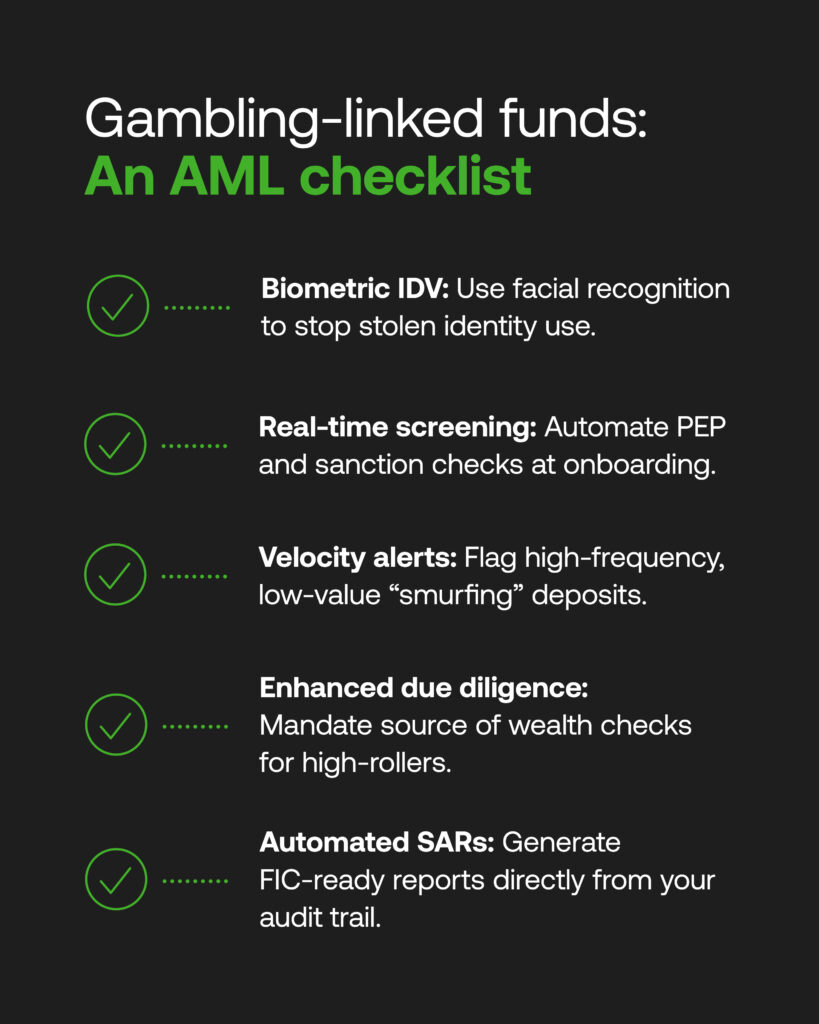
Proactive AML as a competitive advantage
Despite illegal gambling proceeds on the rise and consistently entering South Africa’s financial system, the nation has been too slow to the problem. Regardless whether this is through an unprepared collaborative system to spot laundering tricks in the industry, or a reliance on legacy systems for fincrime reporting, now is the time that the gambling industry is treated as a high-risk threat that expands criminals’ digital toolkits.
Preventing further laundering relies on financial institutions, fintechs, and gambling functions understanding emerging typologies and implementing AML systems tuned to such factors. It will ensure robust detection to appease the FIC’s more critical scrutiny of the sector, and also protect a market that is not looking to be ‘Draconian’ in controlling gambling’s growing digital footprint – and instead safeguard individual players and the integrity of a financial system that has done so much to improve its FATF status.
A harmony between regulation and AML intelligence can meet the online laundering problem head on – and allow commercial and financial opportunities to grow – once proactive gambling AML becomes the norm, at home, and abroad.